
DATA CENTER IMPACTS
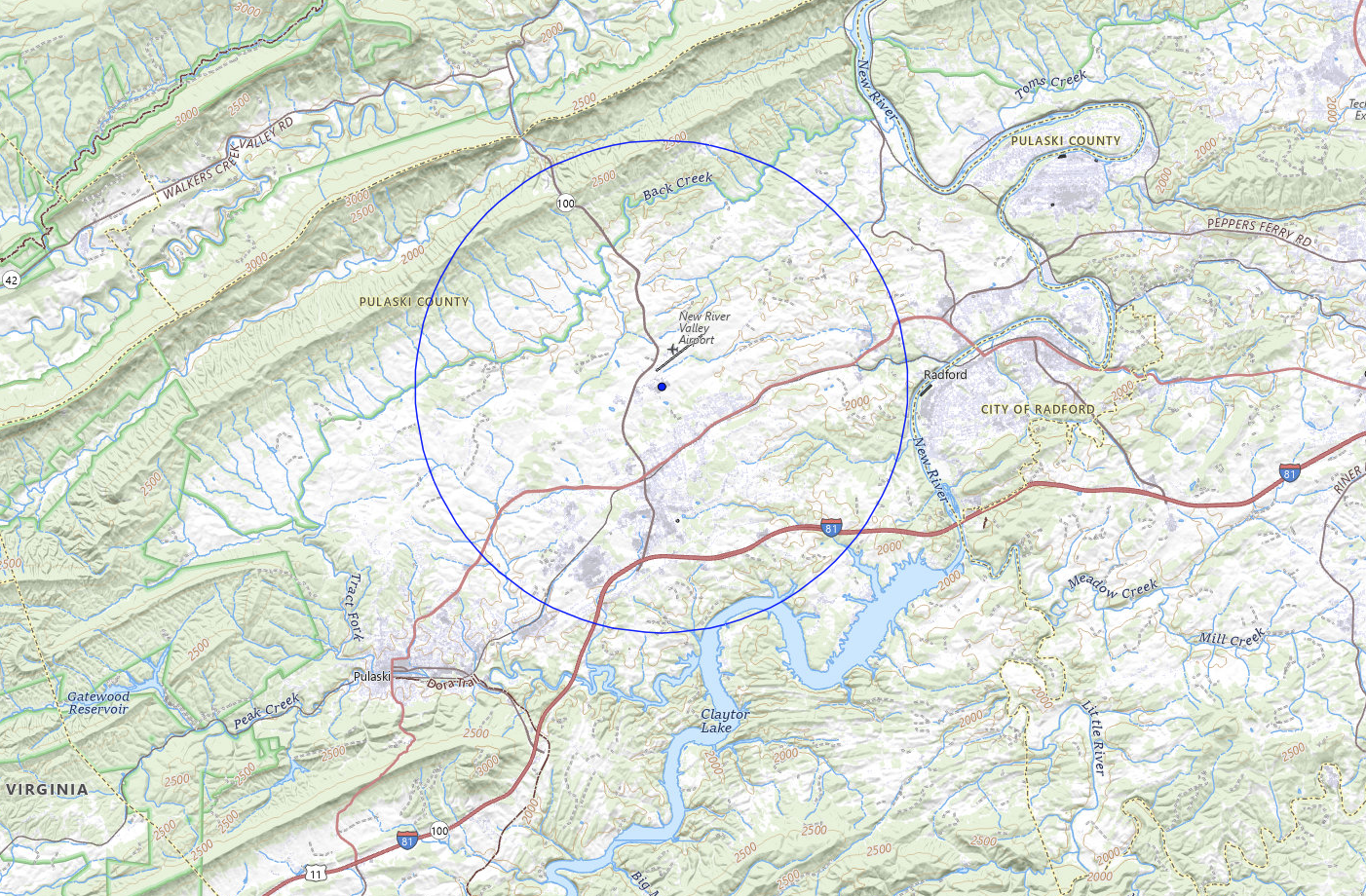
There are many of ways a local data center could negatively impact our health, work, environment, and wallets. Physical impacts of data centers spread beyond a 6 miles radius of the site itself, and environmental and economic impacts can reach regionally.
Jump to info on…

Water Impacts
Data centers use enormous amounts of water — mostly for cooling. Servers generate intense heat and must be cooled continuously, 24 hours a day, 7 days a week. The most common and cheapest method is evaporative cooling, which consumes large volumes of water. A data center planned for Botetourt County is estimated to use up to 8 million gallons of water per day — more than ten times the water used by the largest industrial customer currently served by the Western Virginia Water Authority. WDBJ
The Town of Pulaski's primary drinking water source, Gatewood Reservoir on Peak Creek, dropped more than 2,000 feet below full capacity during drought conditions in early 2026, prompting the town to begin drawing water from the Pulaski County Public Service Authority as a backup. The town is also mid-way through a $25 million water system upgrade, funded in part by customer rate increases, grants, and loans. WVTF
A data center's water demand would likely far exceed what Gatewood Reservoir can supply. Gatewood Reservoir covers just 162 acres and is fed by Peak Creek, which drains approximately 60 square miles of Jefferson National Forest. It is a small, rainfall-dependent system. A large data center would almost certainly require drawing from the New River, Claytor Lake, and/or the county's Public Service Authority — placing new pressure on water sources shared by all county residents. NewRiverConservancy
Data centers remove large volumes of treated drinking water from the local water cycle. That water is typically chemically conditioned for cooling systems and considered unsuitable for agriculture or drinking after use — effectively removing potable water permanently from community supplies. Factually
Discharged cooling water can carry chemicals that affect drinking water, crops, and aquatic life. The most common chemical pollutants from data center cooling systems include biocides — used to prevent the growth of bacteria, mold, and algae — corrosion inhibitors, and heavy metals such as copper, zinc, and lead that leach from degrading metal components. Cooling water returned to the water supply carries higher concentrations of dissolved solids like calcium, chloride, and silica, which can affect the taste of drinking water, lower crop yields, and be toxic to aquatic life. In Pulaski County, the New River and Claytor Lake both could be affected by discharge from a data center nearby. Nature Forward MOST Policy Initiative
Increased temperature in discharge water may lower oxygen solubility and affect metabolism in freshwater wildlife. When warm water enters rivers or lakes, it can stress or kill fish and other aquatic species. This is a particular concern for the New River watershed, which supports significant biodiversity. MOST Policy Initiative
Data centers tend to use significantly more water during the hot and humid summer months than during drier and cooler seasons. This is also when local water supplies face the most stress from drought and reduced rainfall — meaning as residents we would be competing for water with a data center when supplies of water are lowest. Pulaski County experienced this directly in early 2026 when Gatewood Reservoir dropped to critical levels. Nature Forward

ELECTRICITY IMPACTS
Data centers consume staggering amounts of electricity. Ali Mehrizi-Sani, professor and director of the Virginia Tech Power and Energy Center, noted that a single data center can easily consume over 50 megawatts of power, which is comparable to the electricity demand of an entire town. WSLS 10
Pulaski County Administrator Jonathan Sweet acknowledged that finding and generating enough electricity to power a data center is one of the challenges they are actively working to address for the New River Commerce Park site. WVTF A data center and power plant are planned together — not just a data center alone. Virginia General Assembly budget documents describe the $15 million in state funding directed to Pulaski County as supporting "up to $3.0 billion in capital investment" through the construction of both a data center and a power plant. The project remains under nondisclosure agreements, with no developer publicly identified. This means the electricity infrastructure to serve the facility would be built on-site — a significant addition to the county's industrial footprint. The Good Men Project
Pulaski County residents already pay some of the highest electricity rates in Virginia. Pulaski County is served by Appalachian Power (AEP), not Dominion Energy. Since 2007, Appalachian Power's residential rates have increased 158 percent — more than three times higher than inflation and far above the 28 percent average rate increase among Virginia's electric cooperatives. Southwest Virginia lawmakers have described AEP's rate increases as a "runaway train," with one senator stating that AEP rates have more than doubled in four years and calling the increases "unconscionable." Clean Virginia Energy Central
While data center representatives have stated that data centers pay for their own electric costs, there is currently nothing in Virginia law that prevents utilities from passing on the costs of new infrastructure to all customers. Virginia's Joint Legislative Audit and Review Commission (JLARC) concluded that energy prices are likely to increase for all customers as data center demand grows, and estimated that data centers could drive up residential bills by $444 per year for Dominion customers by 2040. ARLnow Vcnva Dominion Energy's own 2025 Integrated Resource Plan projects that if data centers do not pay for their fair share of infrastructure costs, monthly residential bills could rise from an average of $159 today to between $255 and $308 by 2035, and up to $381 by 2045 — more than double current electric bills, not accounting for inflation. These projections apply primarily to Dominion's service territory, but they signal the direction of travel for Virginia ratepayers broadly, including those served by AEP. Piedmont Environmental Council
AEP spokesperson George Porter stated that PJM, the regional grid that serves Virginia including Southwest Virginia, is expected to "pretty much double the demand," driven significantly by data centers. AI data center demand contributed to an 833 percent increase in the PJM regional capacity market auction price for 2025–2026 compared to the previous year. Virginia's energy demand is projected to rise 183 percent by 2040. When grid capacity tightens, the risk of reliability issues — including outages — increases for all customers. WSLS 10 American Action Forum
The Claytor Hydroelectric Project, built in 1939, is located on the New River right here in Pulaski County. Claytor Dam has a total installed generating capacity of 76 megawatts. The Smith Mountain Project on the Roanoke River — which includes Leesville Dam — is a 636-megawatt pumped storage hydroelectric facility, with Leesville Dam generating an additional 50 megawatts. Claytorhydro WDBJ Drought is already straining Claytor Lake and Smith Mountain Lake right now — before any data center arrives. As of May 2026, Smith Mountain Lake is down five feet from normal water levels due to a 12-month drought — the worst drought the area has seen since 2007. The U.S. Department of Agriculture declared 24 Virginia counties drought disaster areas in April 2026, including Franklin County. The drought has forced AEP to progressively cut back water outflows to conserve what remains in the lake for power generation. WDBJ WDBJ When the dams that serve as the grid's emergency backup are already weakened by drought, any new surge in electricity demand — such as from a large data center — puts the entire regional system under greater stress. WSETDrought.gov Fluctuating levels both in the lakes and the rivers below the hydro dams also impact tourism, recreation and general safety and flood risk.

NOISE Impacts
The main noise sources from a data center are diesel generators, cooling systems, and the constant high-power draw from the electricity grid — which causes a low-frequency humming similar to HVAC fans. Air-cooled chillers, cooling towers, server fans, air handling units, and other hardware also contribute, especially inside the facility where enclosed spaces amplify the sound. TechTarget. Much of this equipment sits on rooftops, allowing low-frequency sound waves to travel far and wide. DataCenterKnowledge
Sound levels over 65dBA are considered unsafe and can cause increased stress and blood pressure. Noise levels inside a data center can reach 100 dBA — a level at which exposure for just half an hour can damage hearing. TechTarget High environmental noise levels, particularly at night, can cause sleep deprivation and decreased cognitive performance. The elderly, children, shift workers, and people with chronic illnesses are most at risk. Environmental and Energy Study Institute
Low-frequency noise is especially harmful because it travels farther, penetrates buildings, and is difficult to mitigate. Over time, it can contribute to sleep disruption, anxiety, cardiovascular stress, and other health impacts. Sierra Club Unlike episodic industrial noise, data center sound is persistent. Cooling systems operate continuously to keep servers within narrow temperature ranges — the mechanical hum does not pause at night. Digital Emissions
One increasingly discussed form of sound pollution is infrasound — frequencies inaudible to humans but physically felt. Some residents claim it causes headaches, insomnia, nausea, and anxiety. Researchers are actively studying this, and it's a growing source of community complaints because infrasound doesn't register on standard decibel meters. Tom's Hardware
The sound doesn’t just impact people. Data center noise disrupts animal communication and forces wildlife to seek new migration patterns — similar to how boat engines and sonar affect marine life. TechTarget There are also specific risks to farms and livestock. Noise levels above 70 dB are considered problematic for dairy cow welfare, and are associated with a higher number of somatic cells in milk — an indicator of poor health and stress. During milking, noise should ideally not exceed 65–70 dB. MDPI Noise at 80 dBA was found to result in an abnormal poultry egg rate of approximately 5.5%, rising to 14.6% at 100 dBA. Other observed effects include higher rates of dead embryos in eggs and genetic changes causing limb and beak deformation in subsequent generations. MDPI Noise has been established as a stressor in pigs, cattle, and poultry across multiple studies. Violent behavioral responses such as crowding have been observed in chickens exposed to intermittent sounds at 100–118 dB. ScienceDirect

AIR QUALITY IMPACTS
Data centers carry two distinct sources of air pollution: backup diesel generators and the power plants that supply their electricity. The generators sit on-site and affect nearby residents directly. The power plants may be miles away but contribute to regional air quality and greenhouse gas emissions that affect everyone. Data center operations increase electricity demand and reliance on fossil fuel-based power generation and backup diesel generators, contributing to increases in air pollutant emissions.
Virginia General Assembly budget documents describe the Pulaski County project as involving the construction of both a data center and a power plant, representing up to $3 billion in capital investment. Some data centers house gas-powered generation on-site for day-to-day operations, creating continuous air pollution and greenhouse gas emissions — not just occasional backup pollution. Residents in Pulaski County should be asking specifically what type of generation is planned, what fuels it will use, and what air permits will be required. The Good Men Project World Resources Institute
A March 2026 independent study commissioned by the Piedmont Environmental Council analyzed the permitted on-site power system at a Vantage Data Center in Loudoun County. Using the EPA's own health impact model, the analysis found the facility's permitted emissions could result in $53 million to $99 million per year in health-related damages — driven primarily by an estimated 3.4 to 6.5 additional premature deaths per year, along with hospital admissions, asthma outcomes, and lost productivity. Piedmont Environmental Council
AEP’s residential customers in Southwest Virginia have seen electricity rates increase 158 percent since 2007 — driven in part by the utility's heavy reliance on fossil fuels, which make up roughly 80 percent of its power generation. That fossil fuel dependency means that when a data center in the region increases electricity demand, the additional power generated to meet that demand is more likely to come from coal or natural gas than from cleaner sources — adding to regional air pollution beyond what the data center itself produces on-site. Clean Virginia
The three primary pollutants from diesel generators and fossil fuel power generation are:
Fine particulate matter (PM2.5): The American Medical Association found that long-term exposure to PM2.5 was linked with increased risk of heart disease. These microscopic particles penetrate deep into the lungs and enter the bloodstream. Virginia Mercury
Nitrogen oxides (NOx): Contribute to ground-level ozone and smog, worsen asthma, and are linked to lung inflammation and cardiovascular effects.
Carbon monoxide (CO): Reduces the blood's ability to carry oxygen and can cause serious harm at elevated concentrations, particularly for people with heart disease.
These emissions may contribute to both short-term exposures — including acute respiratory and cardiovascular effects — and long-term health risks including chronic disease, adverse reproductive outcomes, and premature mortality. Frontiers A February 2026 study by Virginia Commonwealth University researchers found that backup generators at data centers in Northern Virginia threaten local air quality and in some cases exceed emissions from nearby power plants. Damian Pitt, the study's lead researcher, stated: "You'd rather be living next to a natural gas power plant than living next to a whole bunch of data centers, in terms of the total amount of air pollution they put out per year." The study found that while most data centers run their backup generators only about 5% of the time, some facilities are already releasing 30% or more of their permitted emissions. If data centers were to reach their full permitted emission limits, they could emit 10 to 20 times more pollution than they currently do. VCU News Vcu
Generators are not just emergency equipment — they can be called on to power the grid. During winter storm Fern in January 2026, the U.S. Department of Energy allowed the regional grid operator to ask data centers to run fully on generator power to provide additional electricity to the grid during the emergency, even if it meant exceeding their permitted emissions. As data center electricity demand strains the grid events like this could become more frequent, pushing generators well beyond their routine test-run schedules. News From The States
As of late 2024, a Virginia Mercury analysis found that of 177 DEQ air permits issued to data centers statewide, 155 were in Northern Virginia — with only two in Southwest Virginia and two in the Tidewater region. Pulaski County, and Southwest Virginia, is entering this issue with no air quality monitoring requirement specific to data centers in place. Virginia Mercury

TEMPERATURE IMPACTS
Data centers constantly shed huge amounts of heat into the surrounding environment. Servers generate intense heat around the clock. That heat is expelled through cooling towers, roof vents, and exhaust fans. Unlike a factory that runs shifts, a data center never turns off.
A March 2026 working paper by researchers at the University of Cambridge analyzed NASA satellite temperature data from more than 6,000 data centers worldwide over 20 years. It found an average land surface temperature increase of 3.6 degrees Fahrenheit in surrounding areas, with some extreme cases reaching 16.4 degrees Fahrenheit, and a detectable warming effect up to 6.2 miles from a facility. CNN
A peer-reviewed study published in May 2026 in the Journal of Engineering for Sustainable Buildings and Cities measured air temperatures around data centers in Arizona using sensors mounted on vehicles. Temperatures downwind of the facilities were on average 1.3 to 1.6 degrees Fahrenheit warmer than upwind, with peaks reaching 4 degrees Fahrenheit above upwind temperatures. . Gizmodo
When heated cooling water is discharged back into the water supply, it lowers oxygen levels and can affect the metabolism of freshwater wildlife. The New River runs directly through Pulaski County and would be the most likely receiving waterway for any such discharge. Lower oxygen levels harm fish and other aquatic species that residents and visitors depend on for recreation and that the ecosystem depends on for health. MOST Policy Initiative
Warmer temperatures near a data center would likely increase demand for air conditioning and electricity among nearby households. For Pulaski County residents already facing some of the highest electricity rates in Virginia, even a small increase in cooling demand means higher monthly bills. The Weather Channel
Higher air temperatures accelerate evaporation from soils, streams, and reservoirs. Pulaski County's Gatewood Reservoir dropped to historic lows during the 2025–2026 drought. Any additional heat load in the watershed increases evaporative pressure on that already-stressed system — the same system that supplies the town's drinking water.
Higher local temperatures affect dairy cattle, poultry, and other livestock directly — reducing milk production, harming reproduction, and increasing veterinary costs. Localized warming can also alter growing seasons and frost patterns for nearby farms.
Notice something that’s missing, out of date, or misinformed?
Please let us know (and be sure to share your sources!) so we can be certain the information we share is accurate.